
M2 PAIP - Techniques numériques pour l'optique
Caption
About this course
Ce cours vise à fournir aux étudiants les compétences nécessaires pour aborder la simulation dans les différents domaines de l'optique.
Abschnittsübersicht
-
-
Ici sont présentés les supports de cours, les documents sources ayant permis la réalisation de ce dernier, et finalement les codes de corrections pour chacune des séances.
-
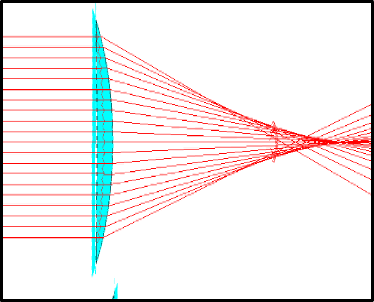
Cours Magistral 1 - Ray tracing
-
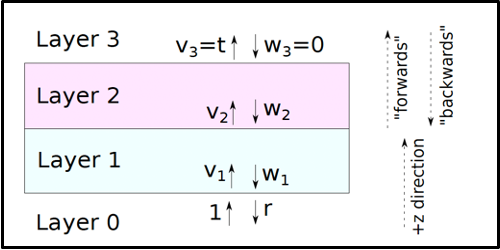
Cours Magistral 2 - Milieux multi-couches
-
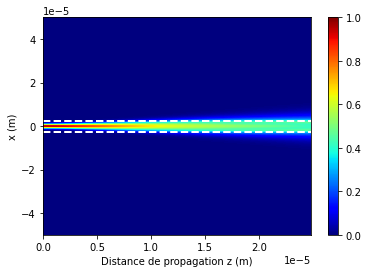
Cours Magistral 3 - Beam Propagation
-
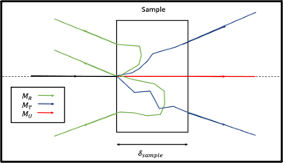
Cours Magistral 4 - Monte Carlo pour l'optique diffuse
-
-
Comme indiqué dans les précédentes slides de cours, vous devez choisir un projet en lien direct avec une ou plusieurs des thématiques développées dans les précédents CM. L'évaluation sera composée de 4 livrables, à savoir :
- Une fiche descriptive du projet indiquant les objectifs du projet et les moyens mis en œuvres pour y parvenir
- Les fichiers source de code qui vous ont permis de répondre à votre problématique de sujet
- Un rapport sous forme d'article scientifique faisant part de votre démarche scientifiques, de vos principaux résultats et des perspectives
- Une présentation orale qui aura lieu devant l'ensemble de la promo pour partager votre projet
-
Teilnehmer/innen müssenAbgabe einreichenDeadline : dimanche 29/10/23
Description : Le projet de recherche doit aborder les méthodes numériques en optique, et s'y concentrer. Le projet de recherche doit être un travail original. Pour être accepté, il doit avoir été préalablement validé par le professeur titulaire du cours. Déposez une brève description de votre projet : une à deux pages dans un fichier PDF serait parfait. Un exemple de fiche descriptive est fournie ci-dessus.
Barème : 2 points
-
Article scientifique AufgabeDeadline : jeudi 13/12/2023
Descriptif : C'est l’essentiel des travaux à réaliser. Il doit s'agir d'un article scientifique, rédigé en utilisant les lignes directrices et les conventions que vous avez vues en cours : son contexte, ses méthodes, ses résultats et sa discussion. Vous pouvez vous inspirer (pour la forme) des bons articles de l'an passé fournis ci-dessus.
Barème : 8 points -
Code AufgabeDeadline : jeudi 13/12/2023
Descriptif : Déposez ici votre code, c'est à dire vos fichiers Python (ou autre).
Barème : 5 points
-
Support de présentation orale AufgabeDeadline : jeudi 13/12/2013
Description : Déposer ici votre support de présentation au format pdf. Celle-ci devra durer entre 10 et 15 min et sera suivie d'une dizaine de minutes par l'ensemble des étudiants. Le jour des soutenances, une évaluation par les pairs aura lieu. La note obtenue sera la moyenne entre la note définie par les étudiants (tous ensemble) et celle de l'enseignant.
Barème : 5 points
-
Example research themes
Spherical and chromatic aberrations.
Quantitatively study the influence of spherical and chromatic aberrations on image formation, focusing for instance on the one lens set-up, the refracting telescope and the reflecting telescope.
Achromatic lens
A classical lens, made of a certain type of glass, has a refractive index that changes (a little) with wavelength. Combining different types of glass to make a single lens can be a solution to design achromatic lenses, the focal length of which does not change with wavelength (or changes less). The goal of the here proposed project is the design of such a lens, with two or more types of glass.The method that can be used could for instance be geometrical optics combined to numerical optimization for the design of the lens. A complete characterization can then be made using ray tracing.
Can elementary python be used for image rendering ?
The object of the research proposed here is to investigate how elementary python can be used for elementary image rendering using ray-tracing. The work can involve programming, using already existing programs, or both.
Study the non linear propagation of a laser beam in a Kerr medium
A Kerr optical medium presents a small refraction index variation which is proportional to light intensity. The goal is here to sutdy non linear Kerr propagation of a Gaussian beam, as a function of beam waist, wavelength and Kerr coefficient. It can be done in 1+1D and 1+2D.
Study the propagation of a laser beam in a wave-guide array
A wave-guide array is a set of regularly spaced wave-guides, close enough one to each other for wave-guide coupling to occur. The goal is to study beam propagation in the wave-guide array in various conditions including, for instance, the launch of one beam in the center wave-guide. Work can be done in 1+1D or 1+2D.
Simulate a Y coupler
A Y coupler distributes an input beam on two output wave guides. Simulate it using Beam Propagation Method and study its behavior as a function of beam wavelength.
Simulate the propagation of a Bessel beamA Bessel beam is a field of electromagnetic, acoustic or even gravitational radiation whose amplitude is described by a Bessel function of the first kind. A true Bessel beam is non-diffractive. Experiment it using BPM to verify this property.
Simulate the propagation of an Airy beam
- Solve the Airy differential equation using scipy to find the Airy function
- Use BPM to propagate it
Simulate the propagation in an optical taper
Optical tapers are used in the optical fiber industry for various applications such as mode adaptation from a fiber to another when core-diameters are different. It basically consists in a glass cone, gradually changing the diameter from one value to another. A detailed description can be found ,for instance, in a technical sheet. The goal of the work proposed here is to use the beam propagation method to simulate the beam propagation from noe optical fiber to the other, through the taper.Show how the GRIN lens focuses a beam
A GRIN lens is a lens that does not use its geometrical shape for the spatial modulation of the optical path length : a GRIN lens can be purely cylindrical since it exhibits an inner index modulation that provides the optical path length modulation. The goal of the work proposed here is to show how the GRIN lens works, using BPM, and show that it does indeed allow the focusing of laser beams.Study the non linear propagation of a laser beam in a photorefractive medium
A photorefractive medium is a medium in which the refraction index can be modulated by light itself. Unlike Kerr effect, where the index modulation is directly proportional to optical intensity, the photofrefractive effect exhibits a complex dependence between refraction index modulation and optical power. In many cases, this relationship can be simplified as a saturable non linearity in which the index of refraction is equal to a ration involving the optical intensity
  , proportional to the squared electric field, and to a material specific constant, the dark irradiance
  which can be set, in this project, to an arbitrary value (or taken from the literature) :
  .The goal of the work proposed here is the study of beam propagation in photorefractive medium using BPM, as a function of wavelength and width, and to compare it to the Kerr effect.
Study light absorption in a solar cell
The behavior of light within a solar cell is usually modeled without taking the reflections between the layers into account. The aim of such a project could to be to compare the two models : one that takes into account the internal reflection in comparison with one that does not.See for instance the solar cells that are described in theses papers :- Abdoulwahab Adaine, Sidi Ould Saad Hamady, Nicolas Fressengeas. Simulation study of a new InGaN p-layer free Schottky based solar cell. Superlattices and Microstructures, Elsevier, 2016, 96, pp.121-133. ⟨10.1016/j.spmi.2016.05.020⟩. ⟨hal-01318037⟩
- Sidi Ould Saad Hamady, Abdoulwahab Adaine, Nicolas Fressengeas. Numerical simulation of InGaN Schottky solar cell. Materials Science in Semiconductor Processing, Elsevier, 2016, 41, pp.219-225. ⟨10.1016/j.mssp.2015.09.001⟩. ⟨hal-02430932⟩
Study light emission within a VCSEL laser
VCSEL laser are lasers that are built on a chip so that is can emit through its surface. As it it composed of layers that are crossed by light as it travels through them, the TMM method can be thought of as interesting. Could it be used to model VCESL lasers ?Space intrumentation (JWST)
Study one of the optical systems of the JWST telescope. The objective is to model the system, explain its operation and design. It will also be necessary to exploit the scientific documentation of NASA and/or ESA.Any other interesting subject